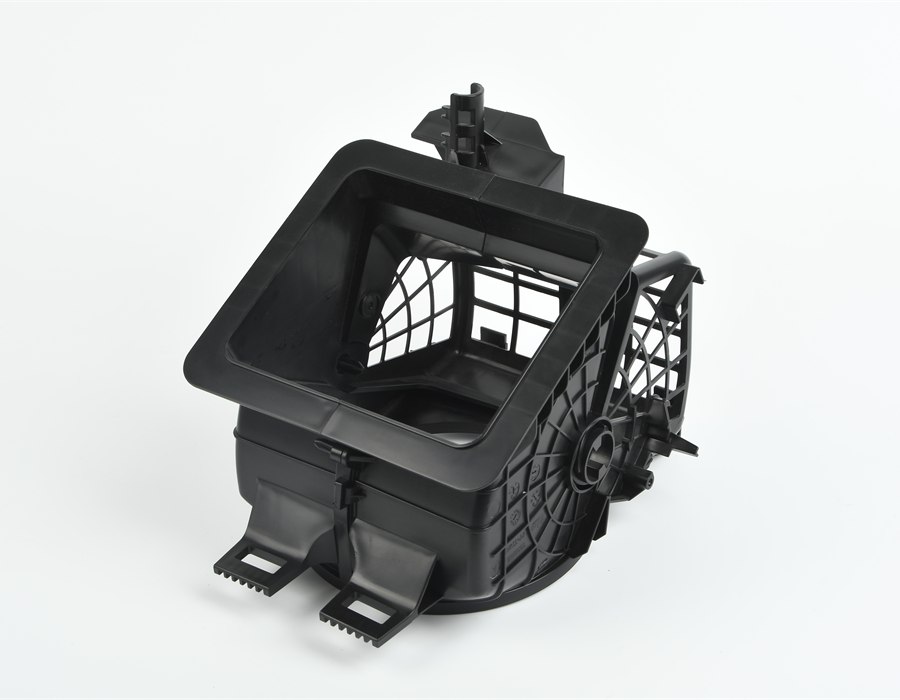
1. Functional requirements come before appearance
Automotive plastic parts may support air flow, clips, brackets, levers, sealing surfaces or assembly interfaces. The part must fit and function repeatedly, so buyers should define critical dimensions and assembly checks before approving mold design.
2. Material choice must match heat, strength and shrinkage
Automotive environments may require heat resistance, impact strength, chemical resistance or dimensional stability. Material shrinkage must be considered in mold allowance, gate location, cooling and trial validation.
Related guide: material shrinkage and dimensional stability.
3. Tolerance strategy should separate critical and normal dimensions
Not every dimension needs tight tolerance. The supplier and buyer should identify functional holes, snap fits, sealing surfaces, locating ribs and assembly points. This avoids over-costing non-critical areas while protecting real function.
4. Mold tooling should control burrs, warpage and repeatability
Parting line, venting, cooling and ejection design affect burrs, flatness and long-term repeatability. Automotive functional plastic parts often need careful mold maintenance because small wear can affect assembly fit or create unacceptable flash.
5. Quality records help overseas buyers control risk
First article inspection, dimension reports, appearance review, assembly tests, sample approval and pilot production records make communication easier for overseas projects. Huanze can support project review from mold design through trial correction and batch production.
6. What to send for automotive plastic part evaluation
Send 3D files, 2D drawings, material grade, critical dimensions, assembly requirements, expected annual volume, sample photos and known defect history. Contact Annie at WhatsApp / WeChat / Phone +86 15801883001 or email annie@huanzekeji.com.
Send Automotive Part Drawings