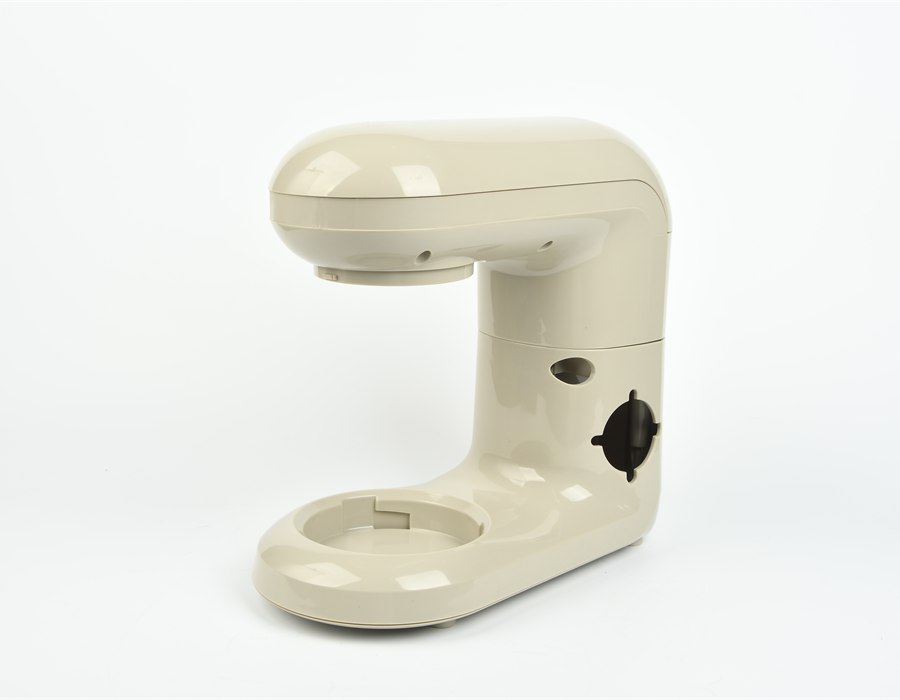
1. Visible surfaces must be protected early
Appliance housings are often judged by texture consistency, color stability, parting lines, gate marks, ejector marks and scratches. Marking A-surfaces in the RFQ stage helps the mold engineer keep gates and ejectors away from sensitive areas where possible.
2. Screw bosses, ribs and snap fits need balanced design
Thick bosses may cause sink marks, thin clips may break, and insufficient draft can create ejection problems. A practical DFM review connects wall thickness, rib ratio, corner radius and assembly load instead of checking each feature separately.
3. Material selection affects appearance and service life
ABS, PP, PC/ABS and other appliance materials differ in shrinkage, heat resistance, impact performance, color matching and surface finish. If the housing needs texture, painting or long-term heat exposure, include those requirements before mold quotation.
4. Mold tooling should support stable batch production
Gate location, cooling, venting and ejection layout affect deformation, sink marks, flash and cycle time. Huanze reviews mold design around production stability, not only the first sample.
5. T1/T2 trials should close cosmetic and assembly issues
T1 trial should check appearance, dimensions, screw assembly, snap-fit strength, gap and flushness. T2 should confirm whether mold corrections solved the issue without creating new deformation or surface defects.
6. What to send for an appliance housing mold quote
Send 3D files, 2D drawings, material grade, texture or painting requirements, visible surface notes, annual volume, sample photos and target schedule. Contact Annie by WhatsApp / WeChat / Phone +86 15801883001 or email annie@huanzekeji.com.
Send Appliance Housing Drawings