Start with product fit, not only factory size
A good injection molding supplier audit begins with the buyer's product type. A factory that is strong in large plastic housings may not be the best choice for tiny precision connector parts. A supplier with automotive experience may understand traceability and PPAP-style records, while a cosmetic housing supplier may be better at surface finish, texture, paint and visual standards.
Before reviewing price, ask whether the supplier has made similar plastic housings, equipment covers, medical device housings, drone shells, connector plugs, automotive plastic parts or appliance components. Relevant experience is more useful than a generic claim of being a complete injection molding factory.
Audit engineering and DFM capability
DFM review is one of the clearest signs of a serious plastic injection mold supplier. A useful DFM report should discuss wall thickness, draft angle, ribs, bosses, undercuts, sliders, lifters, gate location, ejector layout, cooling, venting, parting line, sink mark risk, warpage risk and visible surface protection.
For overseas buyers, DFM also tests communication quality. The supplier should explain risks in clear English, mark issues on the drawing or 3D screenshots and propose practical options. If the supplier only says "no problem" without reviewing the design, the project may face mold corrections after T1 trial.
Check mold room, injection molding and inspection equipment
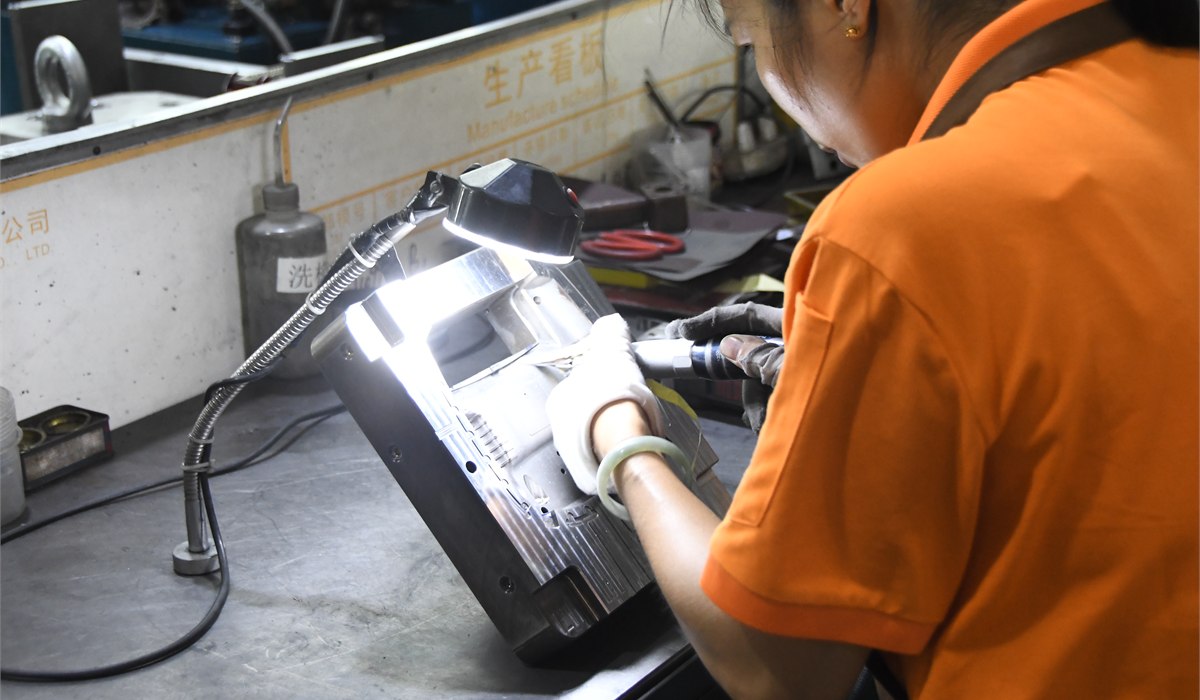
A supplier audit should confirm whether the factory has the equipment needed for your project. For mold tooling, useful capabilities include CNC machining, EDM, wire cutting, fitting, polishing and mold assembly. For production, check the injection machine tonnage range, material drying, color control, mold temperature control and secondary operations such as assembly, printing or packaging.
The equipment list should connect to the product, not exist as a decoration. A large housing needs enough clamping force and stable cooling. A precision plastic part needs careful mold fitting, burr control, repeatable molding parameters and suitable inspection tools.
Review quality records before mass production
Quality records make remote supplier management much easier. Buyers should ask for examples of first article inspection, key dimension reports, appearance standards, material information, process parameters, nonconformance records and outgoing inspection sheets. These records help buyers approve samples without being physically present in the factory.
For cosmetic plastic housings, the audit should include visual criteria for gate marks, parting lines, scratches, sink marks, color difference and texture. For functional parts, the focus may include critical dimensions, assembly fit, sealing surfaces, insertion force or checking fixtures.
Confirm production control, traceability and export readiness
Tooling success does not end with the first good sample. The supplier should show how approved samples move into pilot production and then mass production. Useful controls include approved sample storage, material batch records, setup sheets, process window control, inspection frequency, packing standards and shipment checks.
For buyers in the United States, Germany, France, the United Kingdom and the Middle East, export readiness also matters. Confirm English communication, drawing revision control, photo and video updates, sample shipment process, carton labeling, packaging protection and delivery terms before production release.
Red flags during an injection molding supplier audit
Be careful if a supplier refuses to discuss DFM, cannot explain the mold structure, provides only a very low price without assumptions, has no clear T1/T2 trial process, cannot provide inspection records or avoids questions about material, packaging and revision control. These issues often appear later as delays, repeated corrections or unstable batch quality.
A good audit is not about finding a perfect factory. It is about confirming whether the supplier can manage the risks that matter for your specific part, production volume and target market.
How Huanze supports overseas supplier review
Huanze supports overseas OEM buyers with plastic injection mold manufacturing, custom injection molding, precision plastic parts manufacturing, quality management and project communication through email and WhatsApp. Buyers can send 3D files, 2D drawings, product photos, material requirements, quantity and target schedule for an engineering review.
Related reading: China injection mold supplier guide, quality inspection checklist and files needed for an injection mold quote.
Send Drawings for Evaluation