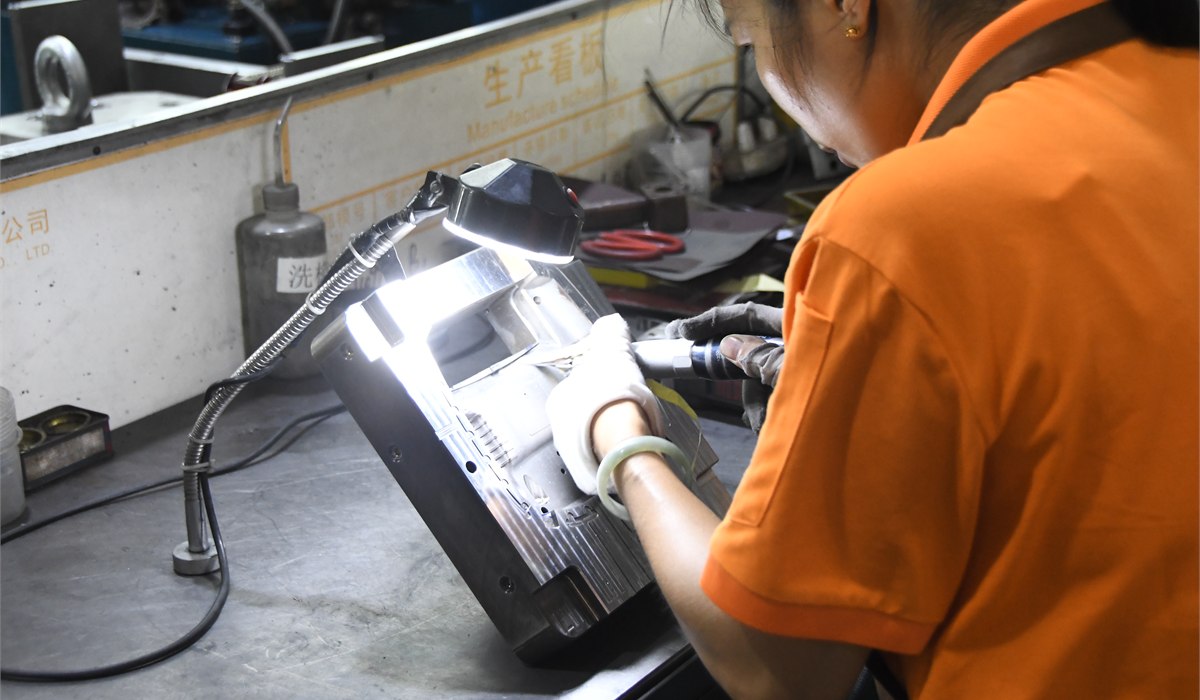
Mold maintenance protects part quality
Injection molds work under pressure, heat, friction and repeated movement. Over time, vents may become blocked, sliders may wear, ejectors may become sticky and cooling channels may collect deposits. These small changes can create flash, burn marks, dimensional drift, ejection marks or unstable cycle time.
For plastic parts with tight assembly requirements, maintenance is not optional. It is part of the production quality system.
Important maintenance check items
Common checks include mold surface cleaning, parting surface inspection, ejector movement, slider and lifter lubrication, vent cleaning, cooling water flow, hot runner status, screw and insert condition, rust prevention and spare part review.
After a repair or mold correction, production should confirm first articles again before releasing batch parts.
Use records to connect mold life and production quality
Maintenance records help engineers see whether a defect is occasional or recurring. If the same flash, burr, warpage or dimension issue appears repeatedly, the record can guide mold correction instead of repeated trial-and-error machine adjustments.
How Huanze supports long-term projects
For repeat production projects, Huanze can support mold storage, maintenance, trial production review, repair suggestions and production issue feedback. This is especially useful for customers who need a supplier for ongoing molded plastic parts instead of a one-time mold purchase.
Related pages: quality management, custom injection molding and plastic injection mold case.