Start with balanced wall thickness
Warpage often begins in the part design. Thick areas cool slowly, thin areas freeze quickly and sudden transitions create uneven shrinkage. Ribs, bosses and snap fits should be designed with proper thickness ratios so they support the part without pulling the visible surface or bending the shell.
For plastic housings, Huanze reviews wall thickness, ribs, screw bosses, snap features and flatness requirements before mold design. If a product has a large flat surface, the design should include support features and realistic tolerance expectations.
Cooling design is a major warpage control point
Mold cooling affects how evenly the plastic part shrinks. Uneven cooling can bend the part even if the cavity shape is correct. Cooling channels, insert material, mold steel and cycle time should be reviewed together, especially for larger housings or parts with different wall sections.
A stable cooling plan also protects batch production. If the first sample looks acceptable but cooling is slow or uneven, production may later show dimension drift, deformation or unstable cycle time.
Gate location changes filling pressure and shrinkage
Gate position affects flow direction, packing pressure, weld lines and shrinkage. A poor gate location can push material unevenly across the part or leave weak packing in distant areas. For cosmetic plastic housings, the gate must also be planned around visible surfaces and assembly needs.
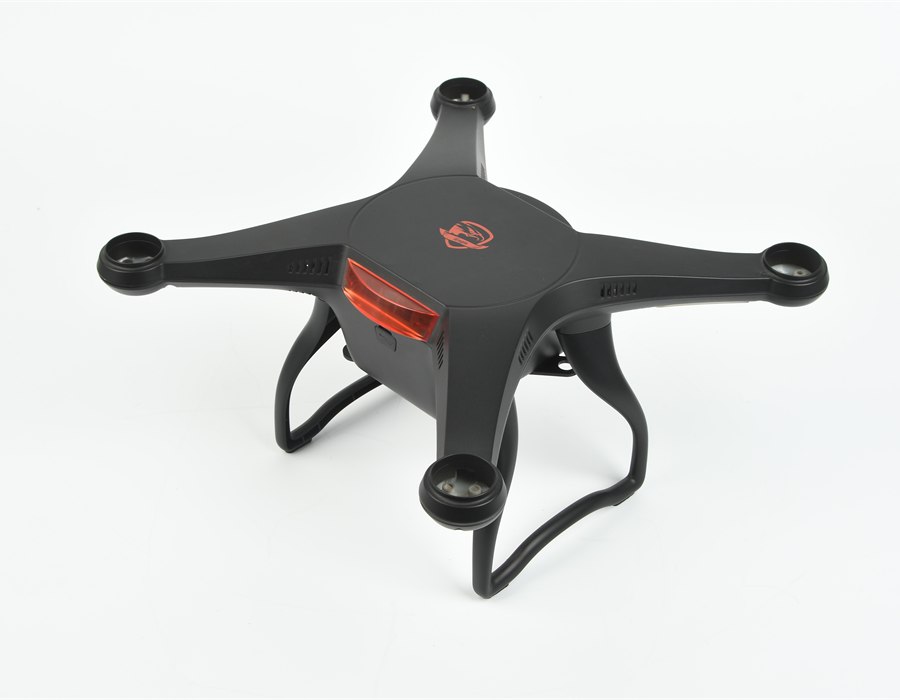
For drone shells, medical housings, appliance covers and automotive plastic parts, Huanze reviews the gate, runner, venting and ejector layout together. This reduces the chance that solving one problem creates another defect.
Process settings cannot fix every design problem
Injection speed, melt temperature, mold temperature, packing pressure, cooling time and holding time all influence warpage. However, process adjustment has limits. If the part design or mold cooling is weak, the molding machine may only hide the problem temporarily.
The best approach is to use process tuning after the mold and part design are already reasonable. During T1 trial, samples should be checked after full cooling, not only immediately after ejection.
How to validate warpage before production approval
Warpage validation should include fixture checks, flatness measurement, assembly testing and visual inspection. If the part needs to fit with another shell, the assembly gap should be measured after both parts have stabilized. Pilot production is useful because it shows whether the process remains stable beyond the first few samples.
Related pages: injection molding defects guide, plastic housing molding and drone shell mold tooling case study.