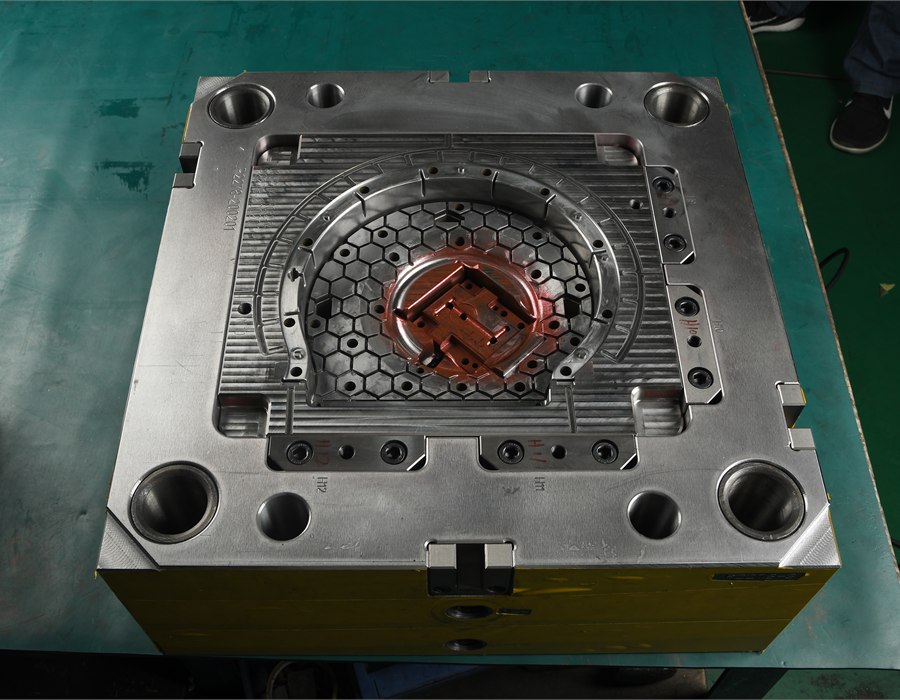
1. Gate location controls how the cavity fills
The gate is the point where molten plastic enters the mold cavity. Its position influences flow length, filling balance, pressure loss, air venting and whether thin or distant areas can fill properly. A gate that looks convenient for machining may not be the best choice for part quality.
For large plastic housings, long flow paths can create uneven filling, flow marks or weak weld lines. For precision plastic parts, gate location may affect critical dimensions, slot stability and assembly fit. Gate location should be reviewed together with wall thickness, material, mold cooling and ejection.
2. Visible surfaces need gate mark planning
Plastic housings, medical device covers, drone shells, appliance panels and controller housings often have customer-facing A-surfaces. If the gate mark appears on a visible or touchable surface, the part may fail appearance approval even when dimensions are correct.
During DFM, buyers should mark A-surfaces, hidden surfaces and areas where gate marks may be acceptable. If the product needs texture, painting, printing or laser marking, gate position should be planned before mold design is finalized. Related guide: surface finish for injection molded plastic parts.
3. Gate location affects weld lines and air traps
When two melt fronts meet around a hole, rib, boss or insert, a weld line can appear. Some weld lines are only cosmetic, but others can reduce strength or affect sealing and assembly. Gate location also influences where air is trapped and where venting should be added.
For parts with screw bosses, snap fits, sealing ribs or connector slots, buyers should ask whether weld lines will appear in functional areas. Mold flow review can help predict these risks before tooling. Related guide: mold flow analysis before injection mold tooling.
4. Gate position influences packing, sink marks and warpage
After filling, packing pressure must reach thick areas, bosses and ribs to reduce sink marks and voids. If the gate is far from a thick feature, the pressure path may freeze too early and leave visible sink marks. If packing is unbalanced, the part may also show warpage or dimensional drift.
This is important for plastic enclosures with internal screw posts and ribs behind visible surfaces. A good gate plan balances appearance, packing efficiency and part deformation risk. Related guide: reducing sink marks in plastic housing injection molding.
5. Gate type should match volume, material and appearance
Common gate options include edge gates, submarine gates, pin gates, fan gates, direct gates and hot runner gates. The best choice depends on part size, resin, cosmetic requirement, trimming method, automation needs, expected production volume and mold budget.
A low-cost gate option may be acceptable for hidden functional parts, but not for a cosmetic housing with strict surface standards. For long-term production, gate wear, maintenance and automatic degating should also be considered.
6. What buyers should send for gate location review
To review gate location properly, send STEP or X_T files, 2D drawings, material, color, surface finish, A-surface notes, assembly parts, critical dimensions, expected volume and any unacceptable gate mark areas. If you already have sample defects, photos of weld lines, sink marks or flow marks are very useful.
Huanze supports overseas buyers with plastic injection mold manufacturing, custom injection molding, plastic housing and enclosure molding, quality management and manufacturing case studies.
Send Drawings for Gate Review