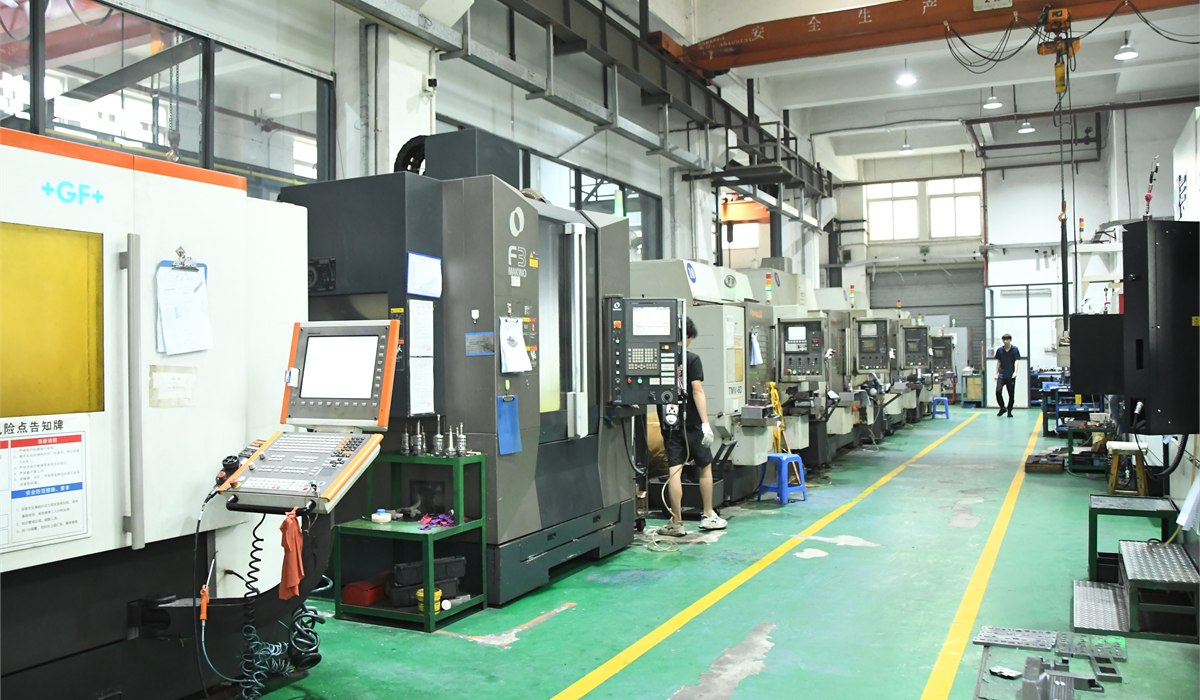
China is home to some of the world's most capable mold making facilities — and also to some of the most problematic. The difference between a successful tooling program and a costly disaster often comes down to one thing: choosing the right partner. This guide walks you through exactly what to evaluate, what questions to ask, and what red flags to watch for when selecting a mold making supplier in China.
1. Equipment and Technical Capability
The machines a mold maker uses directly determine what they can produce. Don't just ask "do you have CNC?" — ask specifically what equipment they run and what tolerances they can hold. Key questions:
- CNC machining centers: How many axes? What brands? High-speed 5-axis machines (like Mikron or Makino) indicate serious investment in precision. A shop running only 3-axis manual mills is a commodity operation.
- EDM capability: Both sinker and wire EDM are essential for complex mold features — ribs, thin walls, and intricate cavity details that cannot be milled. Ask about electrode manufacturing in-house vs. outsourcing.
- CMM (Coordinate Measuring Machine): What accuracy? A shop with 0.003mm CMM capability can verify their own work to micron-level precision. Without CMM, you are relying on dimensional reports of unknown accuracy.
- Injection molding machines: What clamping force range? If a shop has machines from 90T to 1,600T, they can run anything from micro-medical parts to large automotive components for sampling and validation.
- Surface treatment: Do they offer polishing, texturing, and coating in-house? Outsourcing these steps adds time and reduces quality control.
2. Certifications and Quality Management
Certifications are not everything, but they tell you whether a company has invested in systematic quality management. Look for:
- ISO 9001: The baseline. Any legitimate mold maker should hold this. Ask to see the certificate and check the scope.
- IATF 16949: Essential for automotive molds. This standard requires rigorous process control, PPAP capability, and traceability.
- ISO 13485: Required for medical device molds. Demonstrates cleanroom awareness and documented risk management processes.
- ISO 14001: Environmental management. Shows the company is professionally managed beyond just quality.
Be wary of companies that claim certifications but cannot provide certificate numbers or auditor details. Fabricated claims are not uncommon.
3. Experience and Track Record
Years in business matter less than relevant experience. A 20-year-old shop that only makes simple commodity molds may be a poor fit for a complex automotive or medical program. Evaluate:
- Industry relevance: Have they built molds for your industry? A shop experienced in automotive lighting molds understands optical surface requirements that a general-purpose toolmaker does not.
- Complexity: Ask for case studies or project examples that match your part's complexity — multi-cavity, hot runner, side actions, lifters, unscrewing cores.
- Export experience: How much of their output ships internationally? A company that exports 70%+ of its molds already understands Western quality expectations, documentation standards, and communication norms.
- Client references: Can they provide references from companies in your industry? A reputable partner will offer this willingly.
4. Communication and Project Management
Poor communication kills more tooling programs than poor machining. The best mold maker in the world is useless if you cannot get status updates, understand their questions, or resolve design issues quickly. What to look for:
- Dedicated project manager: You should have one point of contact who owns your project from start to finish — not a rotating cast of salespeople and engineers.
- English proficiency: Not everyone needs to be fluent, but your project manager must be able to discuss technical issues, dimensional reports, and design changes clearly in English.
- Real-time reporting: Can they provide weekly schedule updates with photos? Progress reports with dimensional data? This transparency is standard at top-tier mold makers.
- Response time: Test it. Send an inquiry and measure how long it takes to get a substantive response. Same-day responses with technical detail indicate a professional operation. Generic responses after 3 days indicate a trading company or an overloaded shop.
- Design review capability: A good mold maker will review your part design and suggest improvements — not just take your 3D file and start cutting. If they don't push back on questionable features, they are not adding value.
5. Quality Control Process
Quality control in mold making is not just about inspecting the final mold — it is about controlling the process at every stage. Ask about their QC workflow:
- Incoming inspection: Do they verify steel grades and hardness upon receipt? Material substitution is a real risk.
- In-process inspection: CMM checks after roughing and semi-finishing, not just at the end. This catches errors before they become expensive rework.
- T1 sampling protocol: What does their first-article sampling process look like? Do they provide full dimensional reports with Cpk data? Do they document processing parameters?
- Mold qualification: Can they run production-representative sampling with your specified material and document the results?
- Steel certification: Do they provide mill certificates for all mold steel? This is non-negotiable for automotive and medical.
6. Red Flags
Sometimes what a supplier doesn't tell you is more important than what they do. Watch for these warning signs:
- Unrealistically low pricing: If the price is 40–60% below market average, something is being cut — usually steel quality, engineering time, or inspection steps.
- No facility photos or factory tour: A legitimate manufacturer is proud of their facility. A trading company will deflect or show stock photos.
- Reluctance to sign quality agreements: If they won't agree to dimensional tolerances, surface finish standards, or steel specifications in writing, walk away.
- No CMM or inspection equipment: If a shop cannot measure their own work, they cannot guarantee it.
- Single-point contact with no technical depth: If your only contact is a salesperson who cannot discuss mold design or processing, you are likely dealing with a trading company.
- Refusal to allow third-party inspection: Any reputable mold maker welcomes inspection by your designated QC firm. Refusal is a major red flag.
7. Factory Visit Checklist
If you are investing in a significant tooling program, a factory visit is worth the cost of a plane ticket. Here is what to check:
- Shop floor organization: Is it clean and orderly? Are machines well-maintained? Chaos on the floor indicates chaos in project management.
- Machine nameplates: Verify the actual equipment matches what was quoted. A showroom CNC is not the same as a production shop floor full of them.
- Work in progress: What are they currently building? Do the parts on the machines match the complexity they claim to handle?
- Inspection room: Is there a temperature-controlled CMM room? Is the CMM calibrated and actively used?
- Mold storage: How do they store completed molds and work-in-progress? Proper storage indicates professionalism and protects your investment.
- Engineering office: How many engineers? What software do they use (UG/NX, SolidWorks, Moldflow)? Engineering capacity limits project throughput.
- Sample room: Can they show you sample parts and molds from previous projects? Look at surface finish, complexity, and part quality.
Conclusion
Choosing a mold making partner in China does not have to be risky — but it does require due diligence. The right partner combines technical capability with transparent communication, systematic quality control, and a genuine interest in your project's success. The wrong partner will cost you far more than the savings on their initial quote.
At Huanze Technology, we believe transparency is the foundation of a successful partnership. Every client receives a dedicated project manager, weekly progress reports with photos and dimensional data, and full mold flow analysis before machining begins. Our ISO-certified facility in Shenzhen is equipped with MST CMM (0.003mm accuracy), Mikron 5-axis CNC, and injection molding machines from 90T to 1,600T — all available for your inspection.
Ready to Start Your Project?
Contact us for a free quote and see the Huanze difference.
Request a Free Quote